A BETTER WAY TO BUY IBIS
Overview
Ibis Cycles operated as a dealer-only business. Our website was generating demand, but we couldn’t convert it. There was no path to purchase. There was a constant flood of inquiries about “where can I buy this,” and we couldn’t gather demand generation or attribution metrics.
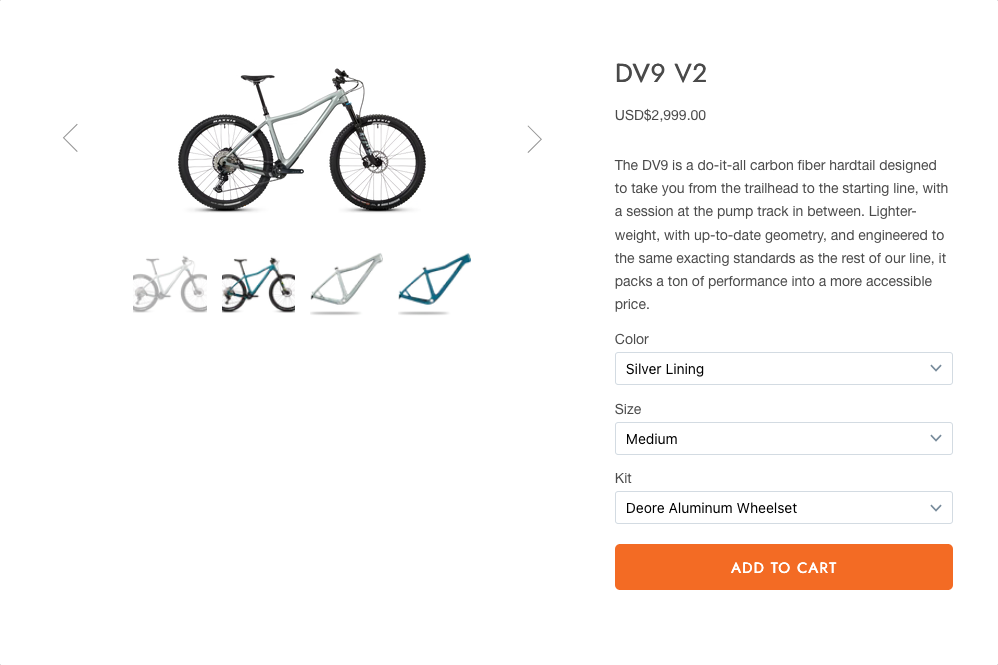
I led the strategy and launch of a new Buy Online, Pick Up In Store (BOPIS) program that connected both real-time dealer stock and our warehouse inventory through ShipEarly.
Challenge
We navigated several critical challenges that could undermine adoption and performance:
- Dealer sensitivity to anything resembling DTC encroachment
- Data integrity across ERP, Shopify, and ShipEarly
- The risk of inaccurate inventory surfacing to customers
- Launching in a down market with limited inventory and seasonal headwinds
These risks influenced decisions around routing logic, margin protection, territory design, and technical architecture.
My Role
I led the program from strategy through launch, including the technical and operational design. My responsibilities included:
- Requirements definition through dealer and internal interviews
- Vendor evaluation and the selection of ShipEarly
- Developing margin and territory structures with leadership
- Defining how ERP, Shopify, and ShipEarly needed to interact, including routing rules, data flow, inventory governance, and our source of truth due to ERP sync latency
- Partnering with UX, development, and platform teams to deliver the experience
- Validating routing logic, data flow, and system behavior
- Overseeing product data accuracy and fulfillment workflow refinement
- Leading internal training and dealer onboarding
- Building the reporting and forecasting models
Throughout the project, the focus was on creating a modern buying experience that strengthened the dealer network, offered a great user experience for riders, and integrated cleanly into our technical and operational constraints.
Strategy
Dealer, customer, and internal interviews shaped our functional and technical requirements. Our dealers told us they didn’t want to use another new program or high-fee platform (e.g. Locally). They needed reasonable margins and territory protection to participate.
We knew a pure DTC approach wasn’t viable for Ibis, because it would require major operational changes (in-house assembly, expanded customer service, etc.). The dealer model comes with important advantages: dealers are active, invested partners who generate built-in demand, and preseason orders provide reliable signals that help forecast production and inventory.
ShipEarly emerged as the strongest fit because many dealers already used it, it integrated with common POS systems (Lightspeed, Workstand), and it had the lowest fee structure. It also integrated with our Shopify ecosystem, which simplified the technical lift.
We launched during an industry downturn and heading into winter, both of which suppress performance. To evaluate performance realistically, I created a simple forecasting model with low, target, and stretch scenarios at 3%, 5%, and 10% of the total sales forecast. This allowed me to assess monthly performance against expected ranges and separate true demand signals from constraints like inventory availability or seasonal traffic. When a model underperformed, the framework clarified whether the cause was something like stock shortages or a need to adjust our marketing.
Solution
We implemented ShipEarly as our BOPIS partner for the following reasons:
Consumer experience
- Real-time local inventory visibility on the Ibis website
- A Buy Online Pick Up In Store checkout on our website
- Automatic dealer location suggested based on IP address
- Dealer-based delivery through select online retailers when no nearby shop had inventory
Dealer alignment
- Margin protection. Dealers received full margin on any order fulfilled from inventory already on their floors, and they could earn up to full margin on warehouse-fulfilled orders based on their preseason commitment.
- Territory protection followed the same structure. High-commitment dealers received protected regions where online orders flowed to them.
- Integrated with systems dealers already used, reducing friction and training overhead.
System architecture
- Unified order flow across ERP, Shopify, ShipEarly, and ShipStation
- Consistent inventory deductions and data sync
- Leveraged existing fulfillment and shipping systems (Shopify, ShipStation), allowing the program to scale without adding additional staffing and requiring minimal additional training.
Operational integration
- Full SOP documentation
- Internal training for CS, ops, and fulfillment
- Dealer onboarding through webinars, automated sequences, and one-on-one support
- BOPIS eliminated an entire class of customer service tickets related to “where can I buy this bike,” shifting most purchase discovery to self-serve
Impact
I designed and launched a revenue channel that balanced commercial goals, partner needs, and technical constraints. The program transformed an unmeasurable funnel into an attribution-ready sales channel, modernized the buying experience without adding operational burden, and strengthened the dealer network. The result was a scalable channel for paid acquisition.
Near-term results
- Despite limited inventory, seasonal headwinds, and zero paid marketing efforts, the channel hit its 30-day target in the first week
- Was on pace to reach roughly 5 percent of total company revenue within the first six months
- ~70% adoption by key accounts within the first 90 days
- Major reduction in customer service time spent on inventory lookups
- Multiple dealers cited this as one of the most well-executed BOPIS rollouts in the industry, highlighting the clear communication, margin structure, and territory protections.
Long-term Results
- A measurable path to purchase that enabled attribution, A/B testing, and segmented marketing
- Paid media became viable because spending could be tied directly to revenue
- Because the program ran on tools we already used, including Shopify, ShipStation, and our ERP, it added capability without adding operational overhead. Order processing, inventory updates, and fulfillment continued through existing systems with no new dashboards or headcount required.
- Forecasting accuracy improved because BOPIS activity flowed through a single, consistent reporting pipeline shared by ERP, Shopify, and ShipEarly.